 +91-8800903073, 8452810712
Ultrananaotech, ULTRANANOTECH
Beyond Filters: Nanorobots Revolutionizing Micro plastics Removal from Water
04
Sep
Sep
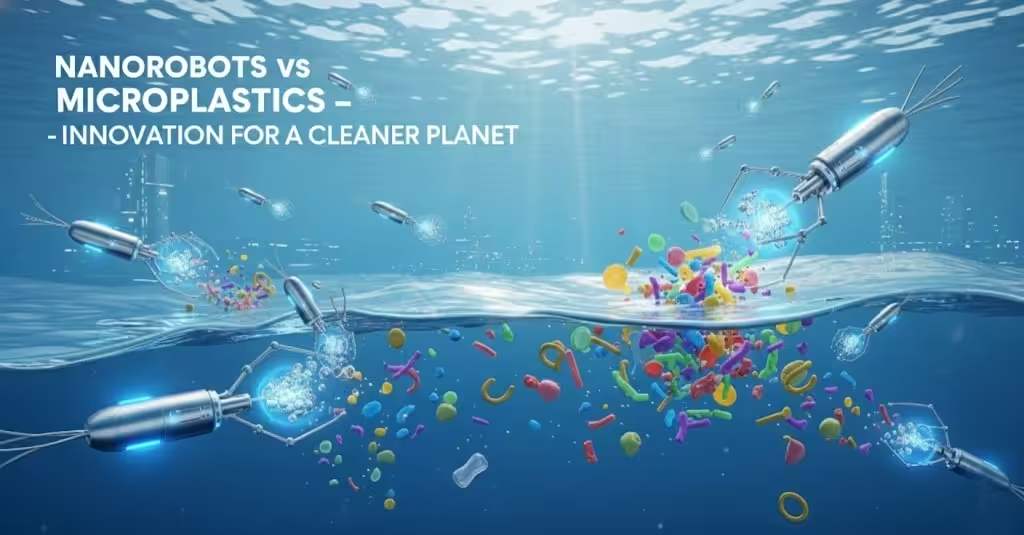
Imagine a world where tiny robots, invisible to the naked eye, patrol our rivers, lakes, and oceans, hunting down harmful plastic particles and cleaning our water. Sounds like science fiction? Welcome to the fascinating reality of nanorobots—the microscopic superheroes designed to tackle one of the planet’s most stubborn pollutants: micro plastic.
What’s the Micro plastic Threat?
Micro plastics are minute pieces of plastic—smaller than a grain of rice—that sneak into our water systems from everyday products like cosmetics, clothing fibers, and plastic waste breakdown. These tiny invaders are everywhere, from the deepest ocean trenches to your morning glass of water, threatening marine life and even human health. Traditional filters and treatment plants struggle to catch these sneaky particles because of their size.
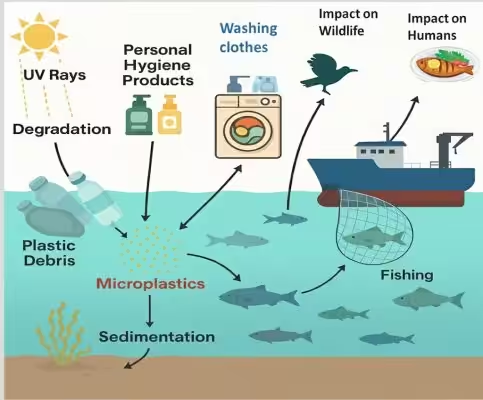
Figure 01: Microplastics in aquatic environment. (Image credit- https://www.mdpi.com/2072-6643/15/3/617 )
Nanorobots: Small but Mighty
Nanorobots are nanoscale machines (typically between 1-100 nanometers) designed to perform specific tasks at the molecular level. Built using nanomaterials like graphene, gold nanoparticles, carbon nanotubes (CNTs), or magnetic nanoparticles etc., these tiny robots can be functionalized with chemical receptors or catalytic surfaces to interact with specific pollutants — in this case, micro plastics.
How do they work?
Nanorobots can be designed to actively seek, capture, and even degrade micro plastics using different mechanisms:
1. Magnetically Driven Nanobots and their working mechanism
- They are composed of iron oxide or magnetic carbon-based materials.
- Navigate through water using an external magnetic field.
- Capture micro plastic particles via electrostatic interactions, hydrophobic binding,or binding through surface functional groups.
- These tiny robots are retrieved by a magnet after capturing plastics.
2. Catalytic Nanobots (Microswimmers)
These are the unique nanorobot whose working efficiency depends on choice of catalyst. They use hydrogen peroxide or similar fuels to self-propel in water. They expose catalytic surfaces of nano robot (e.g., MnO₂ or platinum) that help break down plastic polymers into harmless byproducts. In some cases, nanobots are designed to release enzymes or generate reactive oxygen species (ROS) that help in degrading plastic bonds.
3. Biohybrid Nanorobots
The names itself suggest it is hybrid of Synthetic materials along with biological components like bacteria, enzymes, or protein receptors acts as nanobots. These hybrid bots mimic nature’s degradation pathways but in a highly targeted, and much more effective.
Real Science, Real Results!
Researchers have tested these nanorobots in the lab with exciting results. Some important findings can be summarized as below:
- One type, made from titanium dioxide nanotubes, moves swiftly under UV light and grabs microplastics in seconds, then uses photocatalysis to degrade them.
- Magnetic polymer microrobot swarms have captured up to 80% of microplastics and bacteria in just half an hour, and can be collected and reused. This reusability make them ecofriendly and cost-effective plastic removal solution.
- Star-shaped microrobots powered by visible light can swim, assemble into swarms, and zap microbes while scooping up plastic particles.
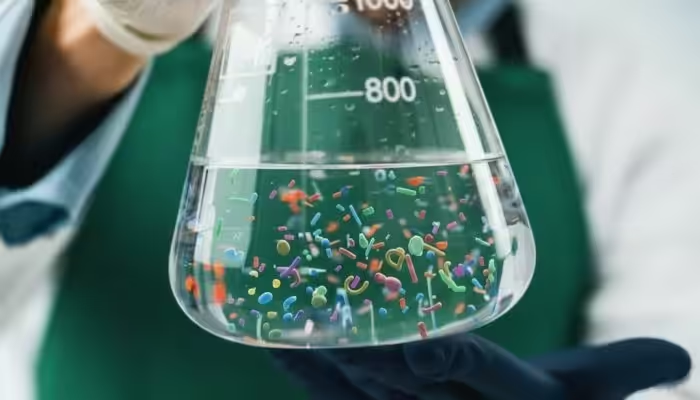
Figure 02: Living beings & Microplastics (Image Credit – https://magazine.publichealth.jhu.edu/2024/microplastics-scourge )
Why Should You Care?
“Because clean water is life”
Nanorobots offer a revolutionary way to fight pollution that’s faster, smarter, and more sustainable than traditional methods. They can actively hunt pollutants instead of passively waiting for them to be filtered out. Plus, their ability to degrade plastics means less waste piling up in our environment.
Future Aspects
While these tiny robots are still mostly in the research phase, their potential is enormous. Imagine future water treatment plants equipped with nanorobot swarms, or portable devices that let you purify water anywhere using sunlight and these microscopic machines.
The fight against microplastics is tough, but with nanorobots on our side, the future of clean water looks brighter than ever.
Conclusion
Nanorobots represent a ground breaking step toward tackling one of the most invisible yet dangerous threats in our water — microplastics. With their ability to actively seek, bind, and even degrade plastic particles at the nanoscale, these smart technologies offer a futuristic but increasingly feasible solution. As research progresses, nanorobots could soon become essential tools in our fight for cleaner, safer, and more sustainable water resources.
Quick Recap: Nanorobots in a Nutshell
- What? Tiny robots engineered to find and remove microplastics from water.
- How? Powered by light, magnets, or chemistry, they swim, capture, and break down plastics.
- Why? They’re efficient, reusable, and can clean water faster than traditional filters.
- When? Still emerging technology, but rapidly advancing toward real-world use.
References
- Title: Light-Powered Micro/Nanomotors for Rapid Capture and Degradation of Microplastics
Journal: ACS Nano
Link:https://pubs.acs.org/doi/10.1021/acsnano.9b01376 - Title: Enzyme-powered microrobots for selective removal of microplastics from water
Journal: Small
Link:https://onlinelibrary.wiley.com/doi/10.1002/smll.202103332 - Title: Catalytic micro- and nanomotors for environmental remediation
Journal: Accounts of Chemical Research
Link:https://pubs.acs.org/doi/10.1021/acs.accounts.9b00627 - Title: Magnetic Nanoparticles for Environmental Purification of Water from Microplastics
Journal: Nanomaterials
Link:https://www.mdpi.com/2079-4991/11/7/1696
- Title: Occurrence and distribution of microplastics in the environment
Journal: Science of The Total Environment
Link:https://www.sciencedirect.com/science/article/pii/S0048969717325412 - MDPI – Open Access Nanomaterials Journal
Website: https://www.mdpi.com/journal/nanomaterials
Courtesy
T Swarnavalli
Technical Executive- R&D and Sales, Ultrananotech
